Follow us on facebook :
https://www.facebook.com/ക്ഷേത്ര-പുരാണം-104111768718668/
Follow us on instagram:
https://www.instagram.com/kshetra_puranam/
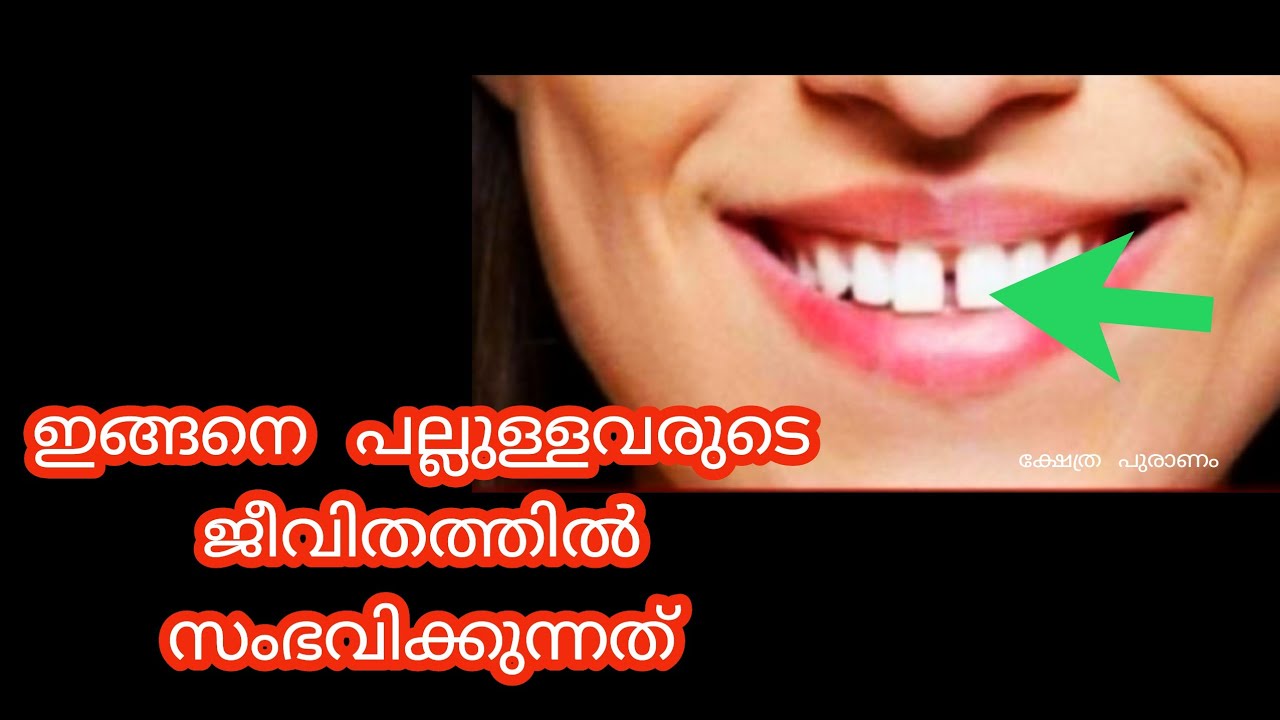
Gap between teeth – India is known for often relating physical features of a human being with their certain personality, behaviour and luck.
For example, what do the moles on your body mean, what does the shape of your lips or eyes or hands reveal, what your birthday tells and so on? Samudrika shastra is the ancient text that reveals an individual’s character based on their body shape and type. Having a gap between your upper front teeth are also counted in here.
In medical terminologies, this gap between teeth is known as “diastema”, which isn’t a flaw, it’s a normal feature that commonly occurs between the incisors and molars and is primarily caused by the imbalanced relationship of the jaw and the size of the teeth.
In humans, the term is most commonly applied to an open space between the upper incisors (front teeth), which is usually called the ‘gap tooth’ or ‘the lucky gap’.
There are lots of people who do not like this Gap between teeth and spend a huge amount of money on dental care trying to cover it. Though astrology, palmistry, face reading, everything concludes it as a characterisation of being lucky. Not only in India but foreign countries like France phrase it as “dents du bonheur”, which literally translates to “lucky teeth”. So there must be some theories behind these generalisations.
Here are a few traits that such people prominently own and they should be proud of inheriting them:
Some cultures believe gaps in teeth are lucky, but a gap between teeth, called diastema, is a common occurrence. Teeth gaps frequently occur in young children whose permanent teeth have not come in yet.
“A gap between teeth has nothing to do with luck but is known to be a genetic trait,” Mariya Malin, DDS, tells WebMD Connect to Care. “It is mostly caused by a low position of the lip muscle attachment to the gums in the middle right between the two front teeth on the bottom or the top,” Malin says.
This piece of skin that connects the lip to the gums is called the frenum. “Surgery to remove the frenum may be required to close a gap,” John Pham, DDS, MS, co-founder and CEO of InBrace, tells WebMD Connect to Care.
Other causes of gaps between teeth include undersized teeth, extra or missing teeth, and habits like tongue-thrusting and finger sucking, according to the Journal of the American Dental Association.
Myth: Using toothpicks or dental floss increases gaps between teeth.
According to the American Dental Association, maintaining proper dental hygiene is important for good dental health. A good hygiene routine includes regular flossing twice a day to remove plaque between the teeth and thereby reduce the risk of gum disease and tooth decay.
Using dental floss is not considered a risk for developing gaps between your teeth, since flossing is recommended daily.
However, while toothpicks also do not increase teeth gaps, they can cause irritation to the gums and should be used with caution. “Toothpicks can be very damaging to the gums and are not recommended by most dentists,” Malin says.
Myth: Gaps in teeth always require orthodontic treatment.
Orthodontic treatment such as braces or invisible dental aligners are not necessarily needed to close gapped teeth unless the gaps are causing a problem with the health of the gums or the proper functioning of the teeth.
“If there is no traumatic bite and gums are not being damaged, orthodontic treatment might not be required, but suggested for cosmetic purposes,” Malin says. Many people prefer to get orthodontic treatment to close teeth gaps for an improved appearance.
Cosmetic dental treatment can also be used to improve the appearance of teeth.
“Another approach is to fill the gaps with cosmetic dental work that increases the size of your teeth like veneers, though this approach cannot be performed for everyone, as it is dependent on good alignment of the teeth,” Pham says.
The beauty standards have evolved over time. Centuries ago the ideal shape of the body was narrow and slender. However, if we fast forward to the 21st century, then the ideal body type is a voluptuous body. Similarly, teeth also play a vital role in adding to a person’s beauty. Aligned teeth are believed to form that beautiful aww inspiring smile. The front teeth gap is not only cute but also has astrological significance.
But nowadays flaws are considered as a god’s work of art. The teeth gap is adorned by many now with grace and poise. In fact, People are now not resorting to filling in their god gifted feature. Not all know that it is a sign of good luck too. Let’s have a look into what the front tooth gap means.
#signsofluck #luckypeople #lucksigns #samudrikashastra
#teeth #gapinteeth #teethgapbehaviour #kshethrapuranam #kshethrapuranammalayalam #kerala #jyothisham #jyothishammalayalam #astrology
- Category
- Try Not To Cum
Commenting disabled.
Up Next
Autoplay
-
00:02

NAKED YOGA (Stretching) EXPLICIT 18+
-
06:23

ഗൾഫിൽ നിന്നും വന്നതിന് ശേഷം ഭർത്താവിനുണ്ടായ ഞെട്ടിക്കുന്ന അനുഭവം...!! FAMILY COUNSELLING MALAYALAM
-
05:59

നവംബറിൽ ഇങ്ങനെ ചെയ്യാമോ?‼️Dare to Talk ‼️ NRN
-
05:49

????????????Ericka Hammond-Naked Yoga School Instructor Also Designs Jewelry!!!
-
09:51

Naked Puts: Like Naked Yoga Except More Exciting
-
00:11

Hot lynx twerk ???????????? [MUST WATCH] [TRY NOT TO CUM]
-
02:41

TRY NOT TO CUM: CSGO EDITION V2
-
05:56

Try Not To Cum ???????? | Cute & THICC TikTok Girls ???????? #6
-
00:14

Try not to cum challenge
-
24:57

[ASMR] TRY NOT TO CUM???????? (gone sexual)