
with Clareta Treger, Department of Political Science; The Edmond J. Safra Center for Ethics, Tel Aviv University. Sunday, August 29th, 2021, 14:00-14:45.
The COVID-19 pandemic exposed millions worldwide to extreme health and economic shocks. In order to contain the pandemic, governments employed various policies, which differed in their level of coercion, from mere nudges and recommendations to strict personal and national limitations, such as lockdowns, quarantines, and shutdowns of economic sectors. However, successful crisis containment and prevention also depends on public support for such policies and compliance with them. Using original survey data collected in Israel in January 2021, this study explores how risk perceptions and actual health or economic exposure to the coronavirus affected support for corona-related policies. Contingent on personal experience and risk perceptions, how supportive were individuals of coercive policies aimed to protect them and the public? Did Corona-induced deterioration in personal health or employment status led to more support for policies aimed to contain the virus? I find that actual exposure (e.g., getting sick or losing one’s job) had only a limited effect on support for the policies. However, the results indicate that what shapes support are concerns regarding COVID-19 health implications (but not economic or emotional consequences). These findings suggest that risk perceptions, regardless of actual exposure, are strong determinants of public preferences for restrictive crisis policies.
Bio: I am a Ph.D. candidate in Political Science at Tel Aviv University. I am writing my dissertation, entitled “Public Attitudes toward Government Paternalism and Nudges,” under the direction of Prof. Michal Shamir and Prof. Yotam Margalit. I am also a doctoral fellow at the Edmond J. Safra Center for Ethics at Tel Aviv University. My research focuses on political behavior and public opinion. In my doctoral research, I explore experimentally to what extent and under what circumstances are people willing to accept government paternalism, and prefer it over less coercive interventions, such as nudges. In addition, I study elections, voter behavior, and democratic culture, as a member of the Israel National Election Study (INES) project and part of an interdisciplinary group of Israeli scholars, which focuses on patterns of representation and their relation to the current state of liberal democracy. I employ quantitative research methods and use public opinion surveys and experiments. I hold a B.A. in Philosophy and Middle Eastern History (Summa Cum Laude) from the University of Haifa, and an M.A. in Political Science (Magna Cum Laude) from Tel Aviv University.
- Category
- Try Not To Cum
Commenting disabled.
Up Next
Autoplay
-
53:55

NAHIMATAY SA MT. APO?!????????????LIFE LESSONS FROM MT. APO EXPERIENCE! LAST DAY NG CAMPING-IA UPDAT
-
09:51
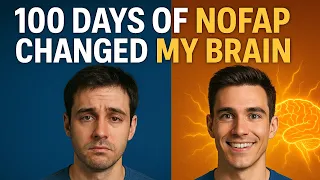
WHAT 100 DAYS OF NOFAP DOES TO YOU - SHOCKING RESULTS | MY PERSONAL EXPERIENCE | NO FAP
-
08:57
SHH????.. Ye PERSONAL Hai 2023 *Men Personal Problems* | Balls| Full body hair Removal | Men Hacks
-
00:16
????♂️TRUE YOGA IS NOT ABOUT THE SHAPE OF YOUR BODY, BUT THE SHAPE OF YOUR LIFE.#reels #yoga #yogag
-
49:17

Lessons from the Home Building Experience: From Joy to Challenges
-
00:11
Hot lynx twerk ???????????? [MUST WATCH] [TRY NOT TO CUM]
-
02:41
TRY NOT TO CUM: CSGO EDITION V2
-
05:56

Try Not To Cum ???????? | Cute & THICC TikTok Girls ???????? #6
-
00:14

Try not to cum challenge
-
24:57

[ASMR] TRY NOT TO CUM???????? (gone sexual)
