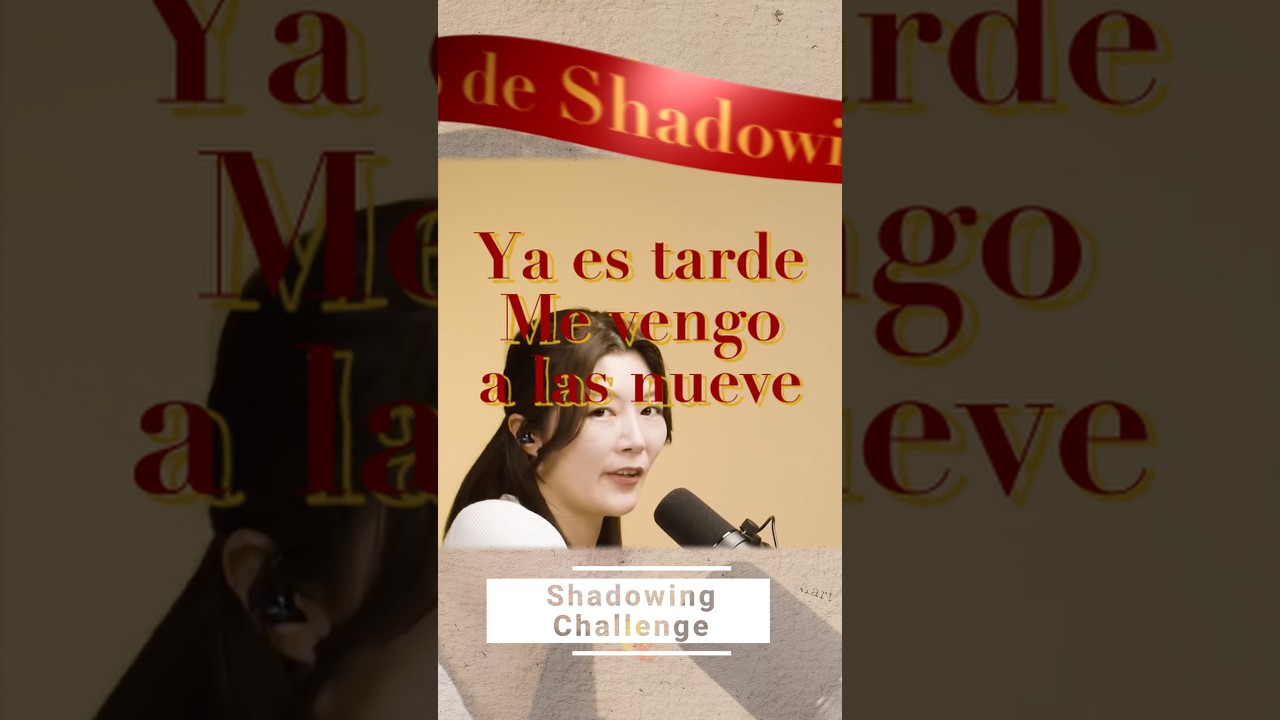
### 1️⃣ Ya es tarde.
- Ya = already / now
- es = is
- tarde = late
???? **It's already late.**
### 2️⃣ Me vengo a las nueve.
- Me = myself (reflexive pronoun)
- vengo = I come (from *venir*)
- a las nueve = at nine o'clock
???? **Literal:** *I come myself at nine.*
???? **Natural (intended):** *I'll be back / I'm coming at nine.*
⚠️ **Problem:** “Me vengo” is commonly used as slang for **“I’m coming” (orgasm)** in many countries.
### 3️⃣ ¡No! ¡Peor!
- No = no
- Peor = worse
???? **No! Even worse!**
### 4️⃣ ¿Qué ha pasado de esta vez?
- ¿Qué ha pasado? = What happened?
- de esta vez = this time
???? **What happened this time?**
*(Slightly unnatural phrasing — more natural would be “¿Qué pasó esta vez?”)*
### 5️⃣ Me vengo, me vengo pues, me voy a venir.
- Me vengo = I come (reflexive)
- pues = well / then
- me voy a venir = I’m going to come (future reflexive)
???? **I’m coming, I’m coming, well… I’m going to come.**
⚠️ **Big Problem:** The person keeps repeating the reflexive form, making it sound more and more sexual.
### 6️⃣ ¿Por qué usteds tienen tantos ajá, ajá?
- ¿Por qué? = why?
- usteds = you guys (misspelled “ustedes”)
- tienen = have
- tantos = so many
- ajá, ajá = aha / uh-huh (sarcastic reaction)
???? **Why do you guys have so many “aha, aha”?**
*(Meaning: Why are you reacting like that?)*
### 7️⃣ Mi amor bello, mejor di "regreso a las nueve."
- Mi amor bello = my beautiful love
- mejor = better
- di = say (imperative of *decir*)
- regreso = I return / I’ll be back
???? **My beautiful love, better say “I’ll be back at nine.”**
---
**???? Summary of the Joke**
The speaker is trying to say **“I’ll be back at nine”**, but keeps using **“me vengo / me voy a venir”**, which in many Spanish-speaking countries strongly suggests **“I’m going to come”** (sexual meaning).
**Correct & Safe version:**
✅ **“Regreso a las nueve.”** or **“Vuelvo a las nueve.”**
#shadowingspanish #spanishtoday #playtolearn #listeningspanish #español
#easyspanish #languagelearning
- Category
- Try Not To Cum
- Tags
- Spanish learning, Spanish A1, SPANISH B1
Commenting disabled.
Up Next
Autoplay
-
01:01
Only Spanish Challenge! #shorts #jancyfamily #spanish
-
00:51
POV: you must speak Spanish until you kiss your soulmate (PART1) #comedy #acting #spanish
-
14:27

¿A quién se refería Hazal Kaya con las palabras "La vida me vengó"#hazalkaya #hazcag #cagatayulusoy
-
07:26

???? Test Your Spanish! ???? 25-Question Love Verbs Quiz in Spanish
-
29:48
Forget Words When Speaking Spanish? Try This Simple Trick!
-
00:11

Hot lynx twerk ???????????? [MUST WATCH] [TRY NOT TO CUM]
-
02:41
TRY NOT TO CUM: CSGO EDITION V2
-
05:56
Try Not To Cum ???????? | Cute & THICC TikTok Girls ???????? #6
-
00:14
Try not to cum challenge
-
24:57
[ASMR] TRY NOT TO CUM???????? (gone sexual)