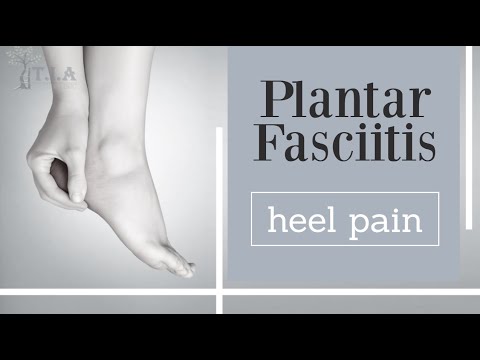
You may experience pain near the sides or front of your heel’s underside.
It’s usually worse when you take your first steps after awakening in the morning or after you’ve been sitting for a long time.
This pain tends to improve with movement but worsens again after you spend a long time on your feet. As plantar fasciitis is often the result of overuse, an extended period of rest may be needed to allow inflammation to resolve.
This means Avoid any running, sports, walking distances and standing for prolonged periods for at least 6 weeks.
Nonsteroidal anti-inflammatory drugs (N-saids) can help ease both pain and inflammation.
Applying an ice pack to the affected foot can also help to reduce swelling and pain.
It should be applied every 2-3 hours but for no longer than 20 minutes at a time.
Rolling your foot over a cold or frozen water bottle can also help to soothe the pain associated with the inflammation.
Lose weight if you are overweight.
Completely avoid any barefoot walking on hard tiles and floors, especially in the morning as this will damage to the plantar fascia tissue and diminish the effectiveness of the treatment.
Buy shoes with a low to moderate heel, thick soles, good arch support and extra cushioning.
You could also try shoe inserts, which offer taking pressure off the plantar fascia and distributing it more evenly around the foot.
Simple home exercises can stretch your plantar fascia, Achilles tendon and calf muscles.
They are effective in relieving symptoms.
Physical therapy is a key part of treatment.
The physiotherapist may use massage and exercises to stretch and strengthen your plantar fascia, Achilles tendon and leg muscles.
He may also use extracorporeal shockwave therapy (ESWT) this involves applying pulsed energy waves to the heel for a few minutes three or four times per week.
This will stimulate a healing response in the affected fascia, resulting in reduced inflammation and pain.
You can also use Strassburg Sock and night splint.
The Strassbourg Sock consists of a tubular fabric with two adjustable straps which extends from the toes to the lower leg.
The aim is to keep tension on the plantar fascia ligament all night long so a little or no pain is experienced in the morning.
You will be instructed to wear the sock for at least 6 hours at night.
A night splint is very similar to the Strassbourg sock, serving the same purpose.
However, this device is very uncomfortable to wear at night and between one and three months is usually recommended this is why most people prefer wearing the sock.
Using ultrasound imaging, platelet-rich plasma obtained from your own blood can be injected.
The injection of PRP is placed in the damaged plantar fascia.
This sparks an increased growth-factor release in the area and promote tissue healing.
If the pain remains bad despite the previous measures, your doctor may recommend cortisone injection.
It may relieve the pain for several weeks.
Bear in mind however, that the treatment does not address the root cause of the inflammation and needs to be repeated every few months.
More than 2 to 3 shots aren’t recommended because they can weaken your plantar fascia and possibly cause it to rupture.
If the pain remains bad despite the conservative measures. Your symptoms have lasted 6 months or more. or Your heel pain interferes with your ability to work.
You may be a good candidate for surgery.
If you have a hard time flexing your feet dorsally due to tight calf muscles, your doctor may recommend lengthening the calf muscle to increase ankle motion and release stress on the plantar fascia.
If you have a normal range of ankle motion, your doctor may recommend a procedure called plantar fascia release.
During surgery the plantar fascia ligament is partially cut to relieve tension in the tissue.
If you have a large bone spur, it will be removed, as well.
Although the surgery can be performed endoscopically, but with an open incision is easier.
#plantarfascitis
#plantarfasciitis
#heelpaintreatment
#heelpain
#heelspur
#plantarfasciosis
#fasciitis
Subscribe to my YouTube Channel:
https://www.youtube.com/channel/UC-VGV6kIMKso3wswhSYvs1g
https://www.facebook.com/tarekorthoclinic
Commenting disabled.
Up Next
Autoplay
-
00:34
Cool Down for Runners & Walkers with Plantar Fasciitis
-
15:30

O que Plantar em JUNHO de 2024????? Calendário de Plantio ???? Horta no Quintal ????
-
44:57
Yoga for Runners & Walkers with Plantar Fasciitis | 45-Minute Recovery & Pain Relief
-
00:28
Warm Up for Runners & Walkers with Plantar Fasciitis
-
05:12

Recette Facile du Pain Kebab ou Pain Panini ! C'est toujours l'heure du pain ♥
-
00:11
Hot lynx twerk ???????????? [MUST WATCH] [TRY NOT TO CUM]
-
02:41
TRY NOT TO CUM: CSGO EDITION V2
-
05:56

Try Not To Cum ???????? | Cute & THICC TikTok Girls ???????? #6
-
00:14

Try not to cum challenge
-
24:57

[ASMR] TRY NOT TO CUM???????? (gone sexual)